



Academy Award-winning director Steven Soderbergh has publicly expressed his enthusiasm for incorporating artificial intelligence tools into his filmmaking process, positioning himself as one of the most prominent Hollywood figures to openly embrace the technology. The declaration places Soderbergh at the center of an intensifying debate within the entertainment industry over AI’s role in creative work — a debate that fueled historic labor strikes just two years ago and continues to divide the filmmaking community.
◉ Key Facts
- ►Steven Soderbergh, who won the Best Director Oscar for “Traffic” (2000), has indicated he is eager to use AI as part of his filmmaking toolkit.
- ►Soderbergh has long been considered a technological innovator in Hollywood, having shot full feature films on iPhones and experimented with digital distribution models.
- ►The 2023 SAG-AFTRA and WGA strikes, which lasted a combined 300+ days, were driven in large part by concerns over AI replacing human creative labor in film and television.
- ►AI-generated content in entertainment is projected to become a multi-billion dollar market segment by 2030, according to industry analysts.
- ►Other directors, including James Cameron and Christopher Nolan, have taken varying stances on AI — Cameron expressing cautious interest while Nolan has voiced skepticism about AI-generated storytelling.
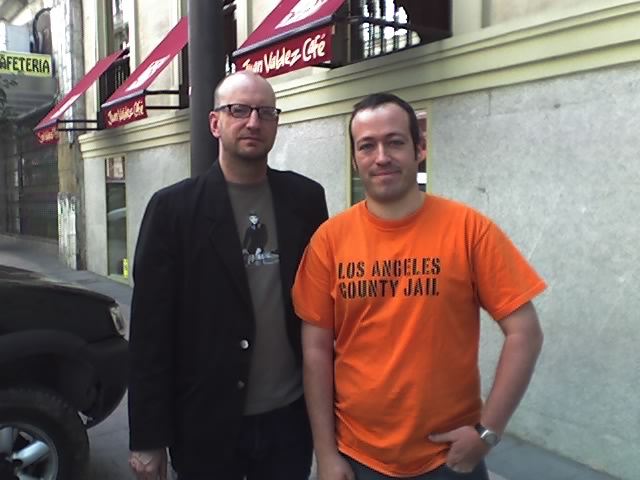
Soderbergh’s willingness to adopt AI is consistent with a career defined by technological experimentation and unconventional production methods. The 62-year-old filmmaker has repeatedly pushed boundaries in how movies are made and distributed. In 2018, he shot the psychological thriller “Unsane” entirely on an iPhone 7 Plus, and followed it with “High Flying Bird” in 2019, also filmed on a smartphone. He was an early advocate for simultaneous theatrical and home video release — a model that was considered radical before the COVID-19 pandemic made it commonplace. His production company has also explored interactive storytelling and non-traditional narrative structures. In this context, his openness to AI represents a natural extension of his philosophy that technology should serve the filmmaker’s vision rather than be feared as a threat to it.
However, Soderbergh’s stance places him in tension with significant portions of Hollywood’s creative workforce. The 2023 dual strikes by the Writers Guild of America (WGA) and the Screen Actors Guild (SAG-AFTRA) were landmark labor actions that brought the entertainment industry to a standstill for months. Central to both unions’ demands were protections against AI — specifically, safeguards ensuring that studios could not use AI to generate scripts, replicate actors’ likenesses, or replace human creative contributions without consent and compensation. The resulting contracts included some of the first formal AI protections in entertainment labor agreements, but many in the industry view those provisions as merely a starting point. The concern is not merely hypothetical: studios and production companies have already begun experimenting with AI for tasks ranging from scriptwriting assistance and visual effects to de-aging actors and generating background performers digitally. A 2024 survey by the Animation Guild found that roughly 75% of animation professionals expressed concern that AI could eliminate or significantly reduce jobs in their field within the next several years.
📚 Background & Context
Steven Soderbergh burst onto the filmmaking scene by winning the Palme d’Or at Cannes for “Sex, Lies, and Videotape” in 1989 at the age of 26, helping launch the American independent film movement of the 1990s. He won the Academy Award for Best Director for “Traffic” in 2001, the same year he was also nominated for “Erin Brockovich.” His prolific career spans genres from heist films (the “Ocean’s” trilogy) to pandemic thrillers (“Contagion,” which gained renewed cultural relevance during COVID-19), and he has consistently operated at the intersection of mainstream studio filmmaking and experimental independent cinema. The broader AI debate in Hollywood reflects tensions that have historically accompanied new technologies in the industry, from the introduction of sound in the late 1920s to the shift from practical effects to CGI in the 1990s — each transition generating both creative opportunities and significant workforce displacement.
The question of how AI will reshape the entertainment industry extends well beyond any single director’s preferences. Major studios including Disney, Warner Bros. Discovery, and Netflix have all invested heavily in AI research and development for content creation, post-production, and audience analytics. Meanwhile, legislative efforts to regulate AI in creative industries remain in early stages at both the state and federal level. California, home to the bulk of the American entertainment industry, has considered multiple bills addressing AI-generated content and the use of performers’ digital likenesses. The European Union’s AI Act, which began taking effect in 2024, includes provisions relevant to creative industries but has faced criticism for not going far enough. Soderbergh’s public embrace of AI may embolden other filmmakers to follow suit, potentially accelerating adoption across the industry. Conversely, it may intensify calls from labor advocates and unions for stronger contractual and legislative protections. As AI tools become more sophisticated — with generative video platforms like OpenAI’s Sora and Runway’s Gen-3 demonstrating increasingly photorealistic output — the stakes of this debate will only continue to rise.
What remains to be seen is how Soderbergh specifically intends to deploy AI in his projects. Whether he uses it for pre-visualization, editing assistance, visual effects enhancement, or more experimental applications could set an important precedent for how the broader industry approaches the technology. The coming months and years will likely see a clearer picture emerge — not just of Soderbergh’s AI-assisted filmmaking, but of whether Hollywood can find a sustainable balance between technological innovation and the protection of human creative labor that has defined the industry for over a century.
💬 What People Are Saying
Based on public reaction across social media and news platforms, here is the general consensus on this story:
- 🔴Conservative-leaning commentators have largely framed Soderbergh’s stance as a welcome rejection of Hollywood’s resistance to technological progress, arguing that AI adoption is inevitable and that market forces — not union protections — should determine how the technology is used. Some have pointed to the 2023 strikes as evidence of an industry more concerned with preserving outdated labor structures than embracing innovation.
- 🔵Liberal-leaning voices have expressed concern that a high-profile director endorsing AI could undermine the hard-won labor protections negotiated during the 2023 strikes, with many emphasizing that AI adoption without guardrails threatens to displace thousands of working-class creative professionals — writers, artists, editors, and performers — who are already in a precarious economic position.
- 🟠The broader public reaction has been mixed, with many acknowledging Soderbergh’s track record as a technological innovator while expressing uncertainty about whether AI can truly enhance artistic quality or will primarily serve as a cost-cutting measure that diminishes the human artistry audiences value in cinema.
Note: Social reactions represent general public sentiment and do not reflect Political.org’s editorial position.
Photo: Jan Beránek via Wikimedia Commons
Photo: soyignatius from Madrid, España via Wikimedia Commons
Political.org
Nonpartisan political news and analysis. Fact-based reporting for informed citizens.





Leave a comment