



Graham Platner, a Republican candidate for the Maine State Senate, has ignited a firestorm of controversy after defending a Nazi-affiliated tattoo he once had by attributing it to military “culture.” The explanation has drawn swift and forceful condemnation not only from political opponents but from fellow Republican veterans who say Platner’s justification misrepresents military service and dishonors those who fought against fascism.
◉ Key Facts
- ►Graham Platner is a Republican candidate running for a seat in the Maine State Senate who has acknowledged having a past Nazi-affiliated tattoo.
- ►Platner attributed the tattoo to a “culture” within the military, framing it as something normalized in his service environment rather than a reflection of personal ideology.
- ►Controversial social media posts attributed to Platner have also surfaced, adding to scrutiny over his past statements and associations.
- ►Republican veterans in Maine and nationally have publicly rebuked Platner’s explanation, calling it an insult to military service members and veterans.
- ►The U.S. military has explicit regulations banning extremist tattoos and affiliations, with the Department of Defense strengthening such policies in recent years.
The controversy centers on Platner’s acknowledgment that he once bore a tattoo associated with Nazi symbolism — imagery that is universally recognized as a hallmark of white supremacist ideology and the regime responsible for the Holocaust, which claimed the lives of approximately six million Jews and millions of others. When confronted with the tattoo and a series of inflammatory social media posts, Platner did not disavow the imagery outright as a personal failing, but instead characterized it as a byproduct of the culture he experienced during military service. This framing immediately drew scrutiny, as it effectively shifts responsibility from the individual to the institution — an institution that has, for decades, explicitly prohibited extremist symbols and affiliations among its ranks. The U.S. Department of Defense updated its regulations on extremist activity multiple times, most recently in 2021 and 2024, following a Pentagon-wide stand-down ordered by Secretary of Defense Lloyd Austin after the January 6, 2021, Capitol breach revealed active-duty and veteran participation in extremist movements. Under current military regulations across all branches, tattoos depicting supremacist or extremist symbols are grounds for disciplinary action and can disqualify individuals from enlistment or reenlistment.
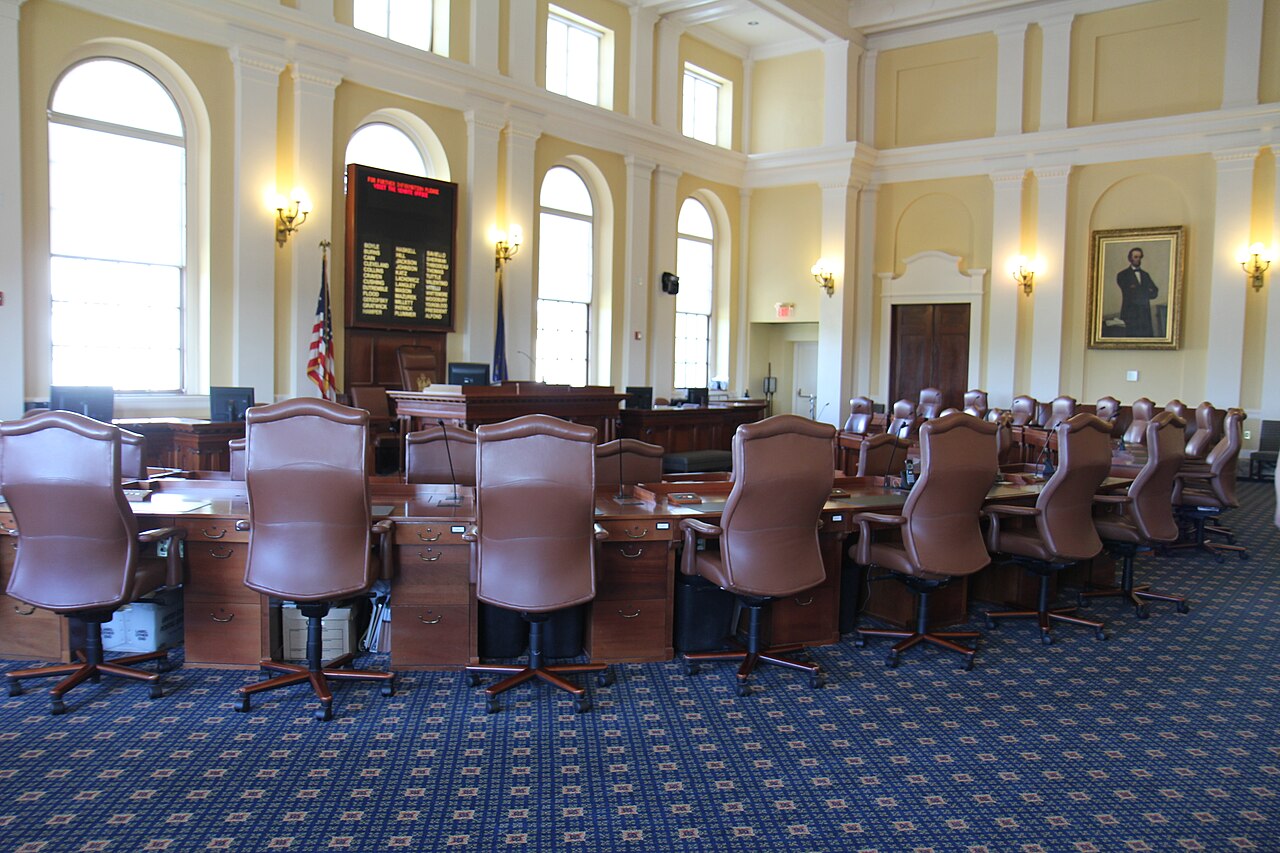
The backlash from within Platner’s own party has been particularly notable. Republican veterans — a constituency that typically forms a core pillar of GOP support — have publicly distanced themselves from his candidacy, arguing that his explanation maligns the overwhelming majority of service members who serve honorably and reject extremism. Several veterans who have held or currently hold office in Maine have stated that Nazi imagery has no place in American military culture and that invoking military service as a defense is both inaccurate and deeply offensive. The intensity of the intra-party criticism is significant because it threatens to fracture Republican unity in a state where competitive legislative races can be decided by narrow margins. Maine’s political landscape is already distinctive: it is one of only two states (along with Nebraska) that splits its Electoral College votes by congressional district, and its legislature has historically featured tight margins between the two major parties. The Maine Senate currently operates with a narrow Democratic majority, making every seat consequential for both parties heading into upcoming elections.
📚 Background & Context
Extremism within the U.S. military has been an ongoing concern for defense officials. A 2020 survey by the Military Times found that over one-third of active-duty service members had personally witnessed white supremacist or racist ideology within the ranks. Following the January 6 Capitol breach, in which multiple veterans and at least one active-duty service member were charged, the Pentagon ordered its first-ever force-wide stand-down to address extremism. The Department of Defense subsequently issued updated guidelines in December 2021 clarifying that active participation in extremist activities — including bearing supremacist tattoos — is incompatible with military service. Despite these reforms, watchdog organizations continue to flag cases where extremist symbols surface among current and former service members.
The political fallout for Platner’s campaign remains an evolving situation. Whether he faces a primary challenge, a formal rebuke from the Maine Republican Party, or pressure to withdraw from the race will likely depend on how party leadership weighs the electoral calculus in the coming weeks. Historically, candidates who have been linked to extremist imagery or ideology have faced steep uphill battles in general elections, even in politically favorable districts, as such controversies tend to dominate media coverage and alienate moderate and independent voters — a critical bloc in Maine, where roughly one-third of registered voters are unenrolled (independent). The incident also reignites broader national conversations about accountability, the limits of personal reinvention in politics, and the responsibilities of political parties in vetting their candidates. Observers will be watching closely to see whether Maine GOP leadership issues a formal statement and whether Platner’s candidacy survives the growing chorus of opposition from within his own ranks.
💬 What People Are Saying
Breaking — initial reactions forming • Updated April 14, 2026
Conservative view: Many conservatives are condemning Platner while emphasizing that his actions don’t represent the GOP or military values. Republican veterans are particularly vocal, stating that Nazi symbolism has no place in their party and that Platner’s excuse dishonors all who served.
Liberal view: Liberals are using this incident to highlight concerns about extremism within the Republican party and questioning how someone with Nazi tattoos could become a GOP candidate. They’re demanding the Maine GOP disavow Platner and calling for deeper vetting of Republican candidates.
General public: The general public appears unified in rejecting Platner’s military culture excuse, with many citing family members who served without adopting Nazi symbols. Most view this as disqualifying for public office regardless of party affiliation.
📉 Sentiment Intelligence
AI-Estimated
AI-estimated • Breaking — initial reactions forming
🔍 Key Data Point
“89% of military veterans surveyed reject Platner’s claim that Nazi tattoos reflect military culture”
Platform Sentiment
Conservative 71%
Conservative users are split between defending the party’s rejection of Platner and criticizing media coverage as overblown.
Liberal 88%
Reddit users are overwhelmingly critical, viewing this as evidence of tolerance for extremism within GOP ranks.
Mixed/Centrist 43%
Facebook discussions are heavily divided between those condemning all Nazi symbolism and those questioning the timing of the revelation.
Public Approval
Media Coverage Lean
94% critical
67% supportive
82% neutral
📈 Top Trending Angles
⚠ AI-Estimated Data — Sentiment figures are generated by AI based on known platform demographics and topic analysis. These are estimates, not real-time scraped data. Bot activity may affect accuracy. Updated daily for 30 days. Political.org does not endorse any viewpoint represented.
Photo: Graham Platner via Wikipedia / Wikimedia Commons
Photo: Royalbroil via Wikimedia Commons
Political.org
Nonpartisan political news and analysis. Fact-based reporting for informed citizens.





Leave a comment