



Iran has officially denied allegations that it has been charging Indian commercial vessels a “toll” or ransom fee for safe passage through the Strait of Hormuz, one of the world’s most strategically vital maritime chokepoints. The denial comes in the wake of President Donald Trump’s warning that any ship found to have paid ransom to Iran would be barred from entering U.S. ports, dramatically escalating an already tense standoff over freedom of navigation in the Persian Gulf.
◉ Key Facts
- ►Iran categorically denied on Monday that it charges Indian ships any fee or toll for transiting the Strait of Hormuz, calling the allegations baseless.
- ►President Trump previously threatened to ban any vessel that paid ransom to Iran from accessing American ports, raising the stakes for global shipping companies.
- ►Approximately 20–21 million barrels of oil per day — roughly 20% of the world’s petroleum supply — transit the Strait of Hormuz, making it the single most important oil chokepoint on Earth.
- ►India is one of the world’s largest oil importers, receiving significant crude shipments from Gulf states through the strait, making it particularly vulnerable to any disruption.
- ►The dispute unfolds against a backdrop of intensifying U.S. maximum pressure sanctions on Iran and stalled nuclear negotiations between Tehran and Washington.
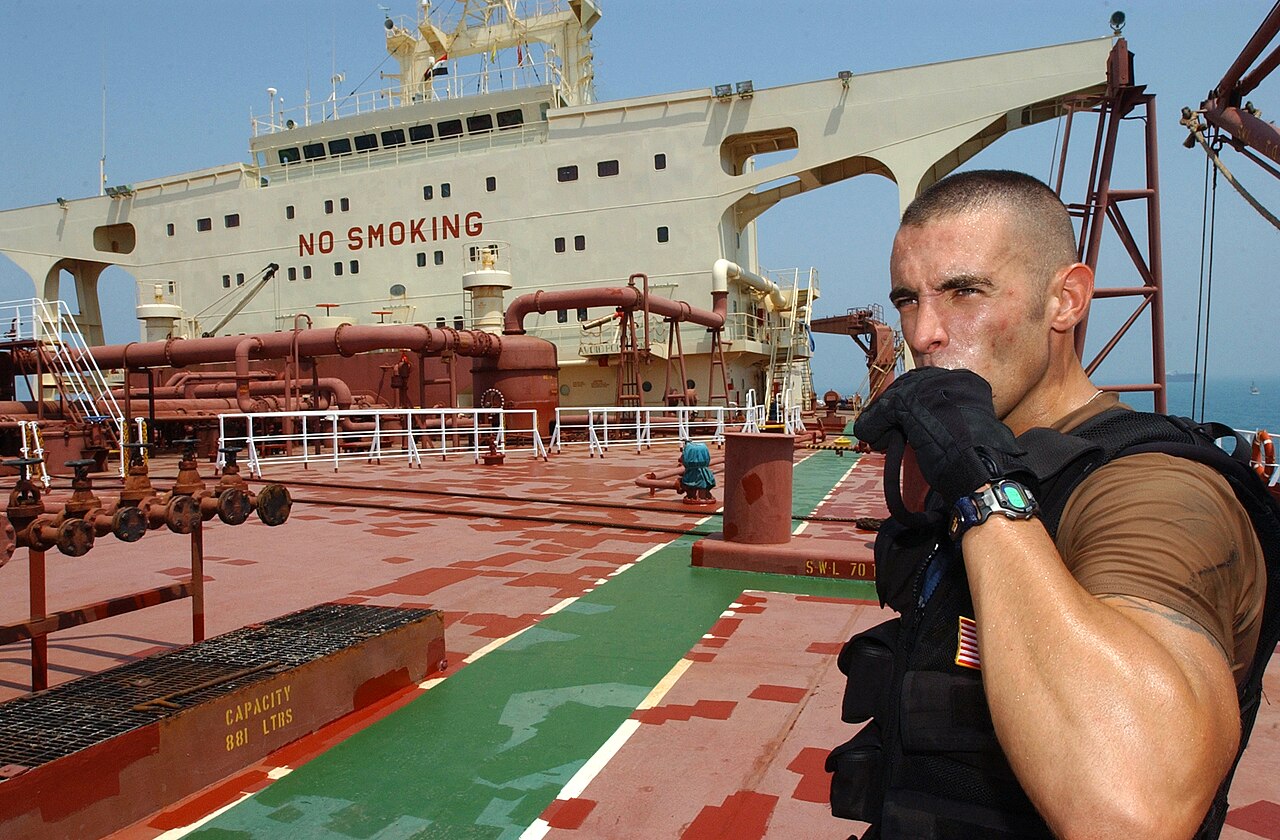
The Strait of Hormuz, a narrow waterway at its tightest point only 21 miles wide between Iran and Oman, has long been a flashpoint in international security. Iran’s Islamic Revolutionary Guard Corps (IRGC) Navy maintains a significant presence in the strait, and Tehran has repeatedly threatened to close the passage in response to economic sanctions or military provocations. The allegations of a toll system — sometimes described as informal ransom payments or “protection fees” — have circulated in maritime security circles for years, with some shipping industry insiders claiming that certain vessels have quietly made payments to avoid harassment, seizure, or delays by Iranian naval forces. Iran has consistently denied any such practice, framing its naval presence as sovereign patrol activity within its territorial waters and exclusive economic zone. The latest denial appears aimed at defusing a situation that could further damage Iran’s international standing and complicate its economic relationships, particularly with India, a country Tehran considers a key strategic and trade partner.
India’s position in this dispute is particularly delicate. As the world’s third-largest oil consumer, India depends heavily on crude imports from Saudi Arabia, Iraq, the UAE, and Kuwait — all of which ship through the Strait of Hormuz. India has historically maintained a careful balancing act between its growing strategic partnership with the United States and its longstanding economic ties with Iran, including investments in Iran’s Chabahar Port, which provides India with a critical trade route to Afghanistan and Central Asia that bypasses Pakistan. Any confirmed payment of tolls to Iran would place Indian shipping companies in direct conflict with President Trump’s executive threat to bar such vessels from U.S. ports — a consequence that could have cascading effects on India’s broader trade relationship with the United States, which totaled over $190 billion in goods trade in 2023. New Delhi has not issued a formal public response to the specific toll allegations but has historically emphasized its commitment to freedom of navigation and international maritime law.
President Trump’s threat to ban vessels that pay Iranian ransom represents a significant escalation of the broader U.S. maximum pressure campaign against Tehran. The administration has reimposed and expanded sweeping sanctions targeting Iran’s oil exports, banking sector, and shipping networks, with the stated goal of reducing Iran’s oil exports to near zero. This approach mirrors the first Trump administration’s strategy from 2018 to 2020, when the withdrawal from the Joint Comprehensive Plan of Action (JCPOA) — the Iran nuclear deal — was followed by punishing sanctions that severely contracted Iran’s economy. During that period, Iran engaged in a series of provocative actions in the strait, including the seizure of the British-flagged tanker Stena Impero in July 2019 and attacks on several commercial tankers that the U.S. attributed to Iranian forces. The current rhetoric raises questions about whether the region could see a return to that level of maritime tension, or whether the toll allegations could serve as a pretext for more direct U.S. naval action in the Gulf.
📚 Background & Context
The Strait of Hormuz has been a focal point of U.S.-Iran tensions for decades, dating back to the “Tanker War” of 1987–1988 during the Iran-Iraq conflict, when the U.S. Navy escorted reflagged Kuwaiti tankers through the strait. In 1988, the U.S. Navy accidentally shot down Iran Air Flight 655 over the strait, killing all 290 aboard — an event that remains a source of deep grievance in Iran. The U.S. Fifth Fleet, headquartered in Bahrain, maintains a permanent presence in the region specifically to ensure freedom of navigation through the chokepoint. International maritime law, specifically the United Nations Convention on the Law of the Sea (UNCLOS), guarantees transit passage through straits used for international navigation, though Iran — which has not ratified UNCLOS — has at times disputed aspects of these provisions.
Looking ahead, several developments bear watching. The U.S. Navy’s posture in the Persian Gulf, including any expansion of escort operations for commercial shipping, could signal how seriously Washington takes the toll allegations. India’s diplomatic response — or lack thereof — will reveal how New Delhi intends to navigate the competing pressures from Washington and Tehran. Global oil markets, already sensitive to geopolitical risk in the Gulf, could see increased volatility if the dispute escalates further. Insurance premiums for vessels transiting the strait, which have risen substantially during past periods of tension, are another economic indicator to monitor. Whether verified evidence of toll payments emerges — or whether the allegations remain in the realm of disputed claims — may ultimately determine whether this episode becomes a passing diplomatic spat or a catalyst for a more serious confrontation in one of the world’s most consequential waterways.
💬 What People Are Saying
Based on public reaction across social media and news platforms, here is the general consensus on this story:
- 🔴Conservative commentators are largely supportive of Trump’s hardline threat, arguing that Iran has long engaged in extortion-like behavior toward commercial shipping and that only credible American deterrence will secure freedom of navigation. Many point to the toll allegations as further evidence that the Iran nuclear deal era of diplomacy was ineffective and that maximum pressure is the only viable strategy.
- 🔵Liberal and progressive voices are expressing concern that the administration may be using unverified toll allegations to justify further escalation with Iran, drawing parallels to past instances where disputed intelligence was used to build cases for military action in the Middle East. Some are calling for diplomatic engagement and a return to multilateral negotiations rather than threats that could disrupt global oil markets and harm allied economies like India’s.
- 🟠The broader public reaction reflects widespread unease about any development that could increase oil prices or draw the U.S. into another Middle Eastern confrontation. Many observers are calling for transparency — demanding that concrete evidence of toll payments be presented publicly before punitive actions are taken against allied nations’ shipping fleets. There is also notable interest in India’s diplomatic positioning and how this dispute will affect U.S.-India relations.
Note: Social reactions represent general public sentiment and do not reflect Political.org’s editorial position.
Photo: Official Navy Page from United States of America
Alex R. Forster/U.S. Navy via Wikimedia Commons
Photo: U.S. Navy photo via Wikimedia Commons
Political.org
Nonpartisan political news and analysis. Fact-based reporting for informed citizens.





Leave a comment