



Sen. Mark Warner (D-Va.), the vice chairman of the Senate Intelligence Committee, publicly challenged the strategic rationale behind President Trump’s announcement that the U.S. military would begin blockading ships seeking to enter the Strait of Hormuz. Warner stated he doesn’t “get the logic” of the move, citing concerns over soaring gasoline prices, the critical volume of global energy that transits the waterway, and the potential for significant geopolitical escalation with Iran and other regional powers.
◉ Key Facts
- ►Sen. Mark Warner questioned the strategic logic of a U.S. naval blockade in the Strait of Hormuz, one of the world’s most critical energy chokepoints.
- ►Approximately 20–25 percent of the world’s oil supply and roughly 25 percent of global liquefied natural gas passes through the strait daily.
- ►U.S. gasoline prices have already reached approximately $4 per gallon, and analysts warn a blockade could push prices significantly higher.
- ►The blockade announcement is tied to the Trump administration’s “maximum pressure” campaign against Iran’s nuclear program and oil exports.
- ►Warner, the top Democrat on the Senate Intelligence Committee, warned the move could destabilize global energy markets and escalate tensions with multiple nations.
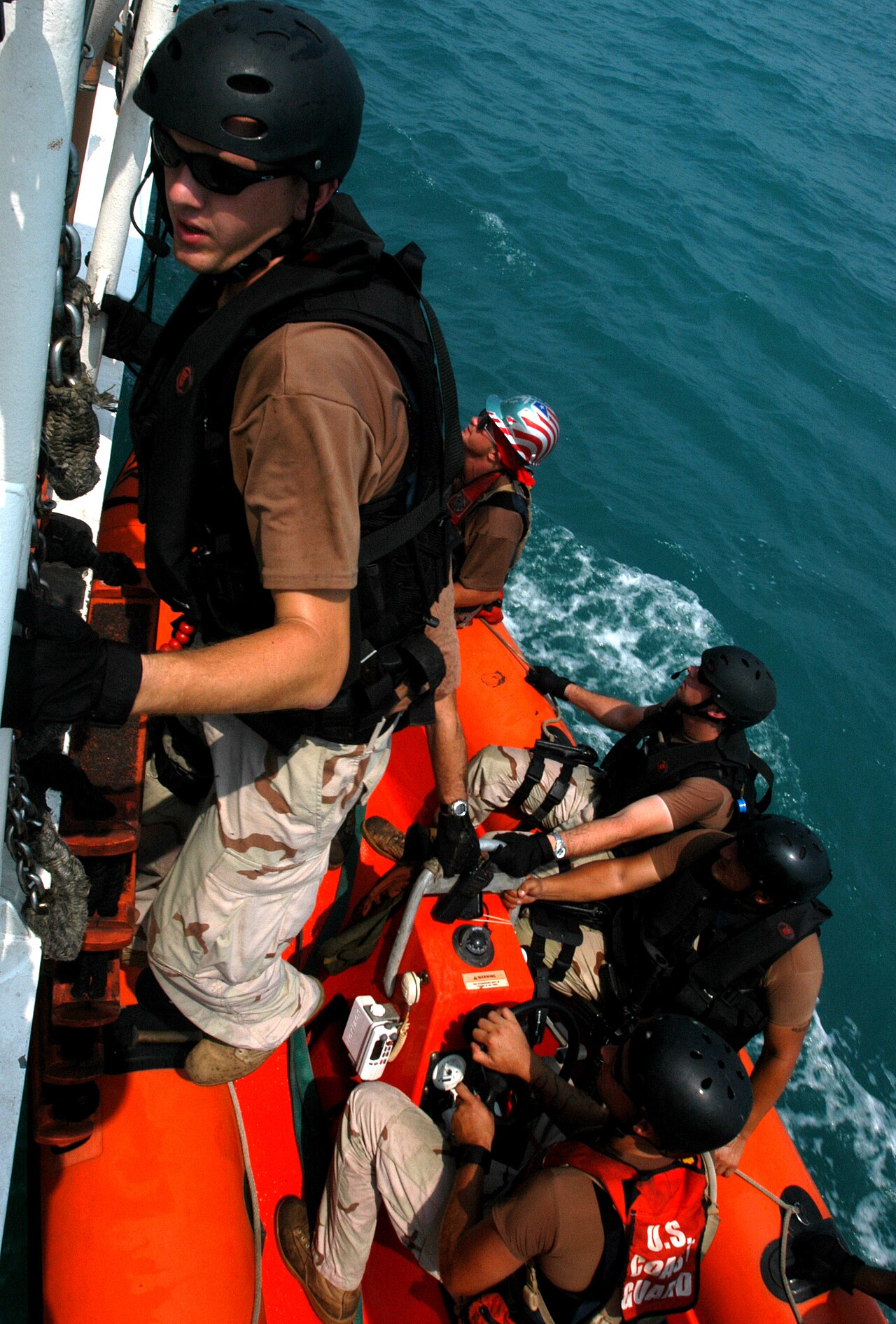
The Strait of Hormuz, a narrow waterway between Iran and Oman at its tightest point only 21 miles wide, is arguably the single most strategically significant maritime chokepoint on Earth. According to the U.S. Energy Information Administration, roughly 17 to 21 million barrels of oil pass through the strait each day—representing about one-fifth to one-quarter of all global petroleum consumption. The strait also serves as the primary export route for liquefied natural gas from Qatar, one of the world’s top producers. Any disruption to traffic through this corridor has historically sent shockwaves through global energy markets. In 2019, when Iran seized a British-flagged tanker in the strait, oil prices surged nearly 3 percent in a single trading session. A full U.S. naval blockade—an act that under international law is generally considered tantamount to an act of war—would represent an escalation far beyond any previous American military posture in the region.
Warner’s criticism reflects a growing bipartisan unease on Capitol Hill regarding the potential consequences of the blockade. The Virginia senator specifically pointed to the contradiction between the administration’s stated goal of lowering energy costs for American consumers and a military action that would almost certainly constrict the flow of hydrocarbons to global markets. Energy economists have noted that even the threat of a blockade can cause oil futures to spike, as traders price in supply disruption risk. With American consumers already facing elevated fuel costs due to a combination of OPEC+ production decisions, refinery capacity constraints, and broader inflationary pressures, the prospect of artificially restricting supply through military action has raised alarm among lawmakers on both sides of the aisle. Several Republican senators have also privately expressed concern, though public GOP criticism has been more muted, with some members of the party framing the blockade as a necessary tool in the effort to prevent Iran from acquiring nuclear weapons.
The blockade also raises profound questions about international maritime law. Under the United Nations Convention on the Law of the Sea (UNCLOS), the Strait of Hormuz is governed by the principle of “transit passage,” which guarantees all vessels—including warships and commercial ships—the right of unimpeded passage. Iran, Oman, and the United Arab Emirates all border the strait, and any unilateral American blockade would affect shipping bound for multiple nations, including key U.S. allies such as Japan, South Korea, and India, all of which are heavily dependent on Gulf energy imports. China, which receives a significant share of its crude oil through the strait, has already signaled that it views any blockade as a direct threat to its economic interests. The diplomatic fallout could extend well beyond the Middle East, potentially straining alliances and complicating trade relationships at a time when the global economy is already navigating considerable headwinds.
📚 Background & Context
The U.S. Fifth Fleet, headquartered in Bahrain, has maintained a permanent naval presence in and around the Strait of Hormuz for decades, tasked primarily with ensuring freedom of navigation. Tensions in the waterway escalated sharply during the 1980s “Tanker War” between Iran and Iraq, when the U.S. Navy escorted reflagged Kuwaiti tankers, and again in 2019 during a series of attacks on commercial vessels attributed to Iranian forces. The Trump administration’s original “maximum pressure” campaign during the first term included withdrawing from the Iran nuclear deal (JCPOA) in 2018 and reimposing sweeping sanctions, but did not include a naval blockade of this magnitude. The current escalation represents a significant departure from prior U.S. policy in the region.
Looking ahead, Congress may be forced to weigh in on the legality and scope of the blockade. Under the War Powers Resolution of 1973, the president is required to notify Congress within 48 hours of committing U.S. forces to military action and must withdraw those forces within 60 days unless Congress authorizes their continued deployment. Several lawmakers have already indicated they may invoke the resolution to compel a debate and vote. The Senate Armed Services Committee and the Senate Foreign Relations Committee are expected to hold hearings in the coming weeks, and bipartisan legislation seeking to constrain the blockade’s scope has reportedly been drafted. Meanwhile, global oil markets remain on edge, with Brent crude futures climbing steadily since the announcement. The coming days will be critical in determining whether diplomatic channels can defuse the situation or whether the standoff in one of the world’s most vital waterways deepens further.
💬 What People Are Saying
Based on public reaction across social media and news platforms, here is the general consensus on this story:
- 🔴Conservative voices are largely split: hawkish commentators frame the blockade as a necessary show of strength to prevent Iran from becoming a nuclear power, arguing that short-term economic pain is worth long-term security. However, fiscally conservative and libertarian-leaning figures warn the move could backfire by spiking energy prices and dragging the U.S. into another protracted Middle Eastern conflict without congressional authorization.
- 🔵Liberal and progressive commentators have broadly aligned with Warner’s critique, emphasizing the economic burden on working families already struggling with high fuel costs. Many have also raised concerns about the potential for the blockade to spiral into a broader military conflict and have called for congressional action to reassert legislative authority over war powers. Some have framed the move as contradictory to the administration’s promises to lower consumer prices.
- 🟠The general public reaction has been dominated by anxiety over gas prices. Across the political spectrum, Americans are expressing concern that the blockade will lead to further pain at the pump. Many centrist commentators are calling for a diplomatic resolution and questioning whether the strategic objectives of the blockade can be achieved without imposing severe economic costs on the American public and the global economy.
Note: Social reactions represent general public sentiment and do not reflect Political.org’s editorial position.
Photo: Official Navy Page from United States of America
Alex R. Forster/U.S. Navy via Wikimedia Commons
Photo: U.S. Navy photo via Wikimedia Commons
Political.org
Nonpartisan political news and analysis. Fact-based reporting for informed citizens.





Leave a comment