



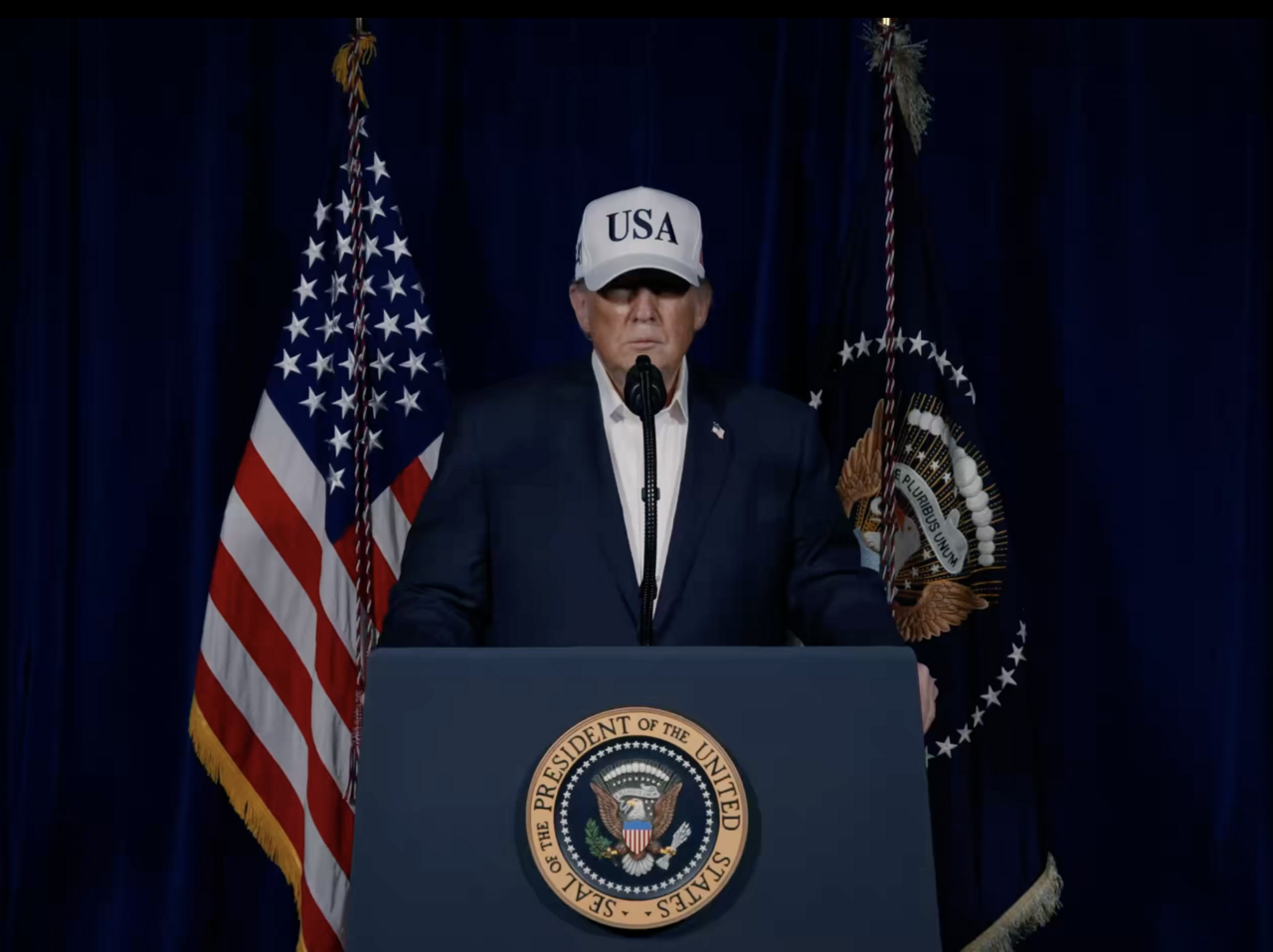
President Donald Trump announced Thursday that a second round of in-person negotiations with Iranian officials could resume over the weekend, asserting that Tehran has ‘agreed’ in principle to forgo nuclear weapons development. The president also offered public praise for the ongoing U.S. maritime pressure campaign targeting Iranian oil exports, signaling a dual-track strategy of diplomacy and coercion.
◉ Key Facts
- ►Trump told reporters a second round of talks would “probably” occur over the weekend, following an initial meeting in Oman.
- ►The president claimed Iran has agreed to the principle of not acquiring nuclear weapons, though Tehran has not publicly confirmed such a commitment.
- ►Special envoy Steve Witkoff is leading the U.S. delegation, with Iranian Foreign Minister Abbas Araghchi representing Tehran.
- ►Trump praised the U.S. sea blockade aimed at restricting Iranian oil shipments, part of a renewed “maximum pressure” campaign.
- ►The administration has threatened military action if diplomacy fails, while Israel has signaled readiness to strike Iranian nuclear facilities.
The diplomatic opening marks a significant pivot in U.S.-Iran relations, which had been frozen since Trump withdrew the United States from the 2015 Joint Comprehensive Plan of Action (JCPOA) during his first term in 2018. That multilateral agreement, negotiated under President Barack Obama, had placed strict limits on Iranian uranium enrichment in exchange for sanctions relief. Following the U.S. withdrawal and reimposition of sanctions, Iran gradually exceeded the deal’s caps, and the International Atomic Energy Agency has reported that Tehran has since enriched uranium to 60 percent purity — a level far beyond civilian need and a short technical step from weapons-grade 90 percent.
The first round of talks, held in Muscat, Oman, was described by both sides as constructive, though the format remained indirect, with Omani officials shuttling messages between the delegations. Iranian officials have publicly stated that their nuclear program is for peaceful purposes and that they are open to verifiable limits, but have rejected full dismantlement — a position that may clash with demands from some U.S. hawks and Israeli officials for a “Libya-style” complete denuclearization. Trump’s assertion that Iran has “agreed” to no nuclear weapons appears to reference Supreme Leader Ayatollah Ali Khamenei’s longstanding religious edict, or fatwa, against weapons of mass destruction, rather than any new binding concession.
📚 Background & Context
Tensions between Washington and Tehran have escalated sharply since the October 2023 Hamas attack on Israel and the subsequent regional conflict involving Iranian proxies including Hezbollah, the Houthis, and various Iraqi militias. U.S. and Israeli strikes have significantly degraded Iran’s air defenses and proxy network over the past year, shifting the regional balance of power and, according to analysts, increasing Tehran’s incentive to negotiate from a weakened position.
The coming weekend’s negotiations will test whether the two sides can move beyond general principles to substantive terms on enrichment caps, inspections, sanctions relief, and timelines. Observers will be watching closely for signs of whether talks shift to a direct format, which Trump has said he prefers, as well as for any reaction from Israeli Prime Minister Benjamin Netanyahu, who has expressed skepticism about diplomatic solutions. Congressional Republicans are also expected to scrutinize any emerging framework against the benchmarks that led them to oppose the original 2015 agreement.
💬 What People Are Saying
Based on public reaction across social media and news platforms, here is the general consensus on this story:
- 🔴Conservative commentators are largely split, with many praising Trump’s combined pressure-and-diplomacy approach while hawkish voices warn against repeating what they view as the concessions of the Obama-era deal.
- 🔵Liberal observers note the apparent irony of Trump pursuing a deal similar in structure to the JCPOA he abandoned, though many welcome any de-escalation pathway that avoids military conflict.
-
Photo: Elvert Barnes via Wikimedia Commons
Photo: Donald J. Trump via Wikimedia Commons
Political.org
Nonpartisan political news and analysis. Fact-based reporting for informed citizens.





Leave a comment