



Raven Johnson, the former South Carolina Gamecocks guard, has joined the Indiana Fever roster — making her a teammate of Caitlin Clark, the player at the center of one of the most talked-about moments of Johnson’s college career. The two were involved in a viral exchange during the 2023 NCAA Women’s Final Four that Johnson has publicly said subjected her to intense online bullying and harassment for months afterward.
◉ Key Facts
- ►Raven Johnson, a point guard out of the University of South Carolina, has been added to the Indiana Fever roster for the 2025 WNBA season.
- ►During the 2023 NCAA Women’s Final Four semifinal, Johnson and Clark were involved in a physical play that went viral, drawing millions of views and sharply divided opinions online.
- ►Johnson has spoken publicly about the severe online bullying she experienced after the incident, describing it as one of the most difficult periods of her life.
- ►South Carolina defeated Iowa 77-73 in that 2023 semifinal and went on to win the national championship, finishing the season undefeated at 38-0 in 2024.
- ►The Indiana Fever, led by Clark, have been one of the WNBA’s most-watched franchises since Clark’s arrival as the No. 1 overall pick in the 2024 draft.
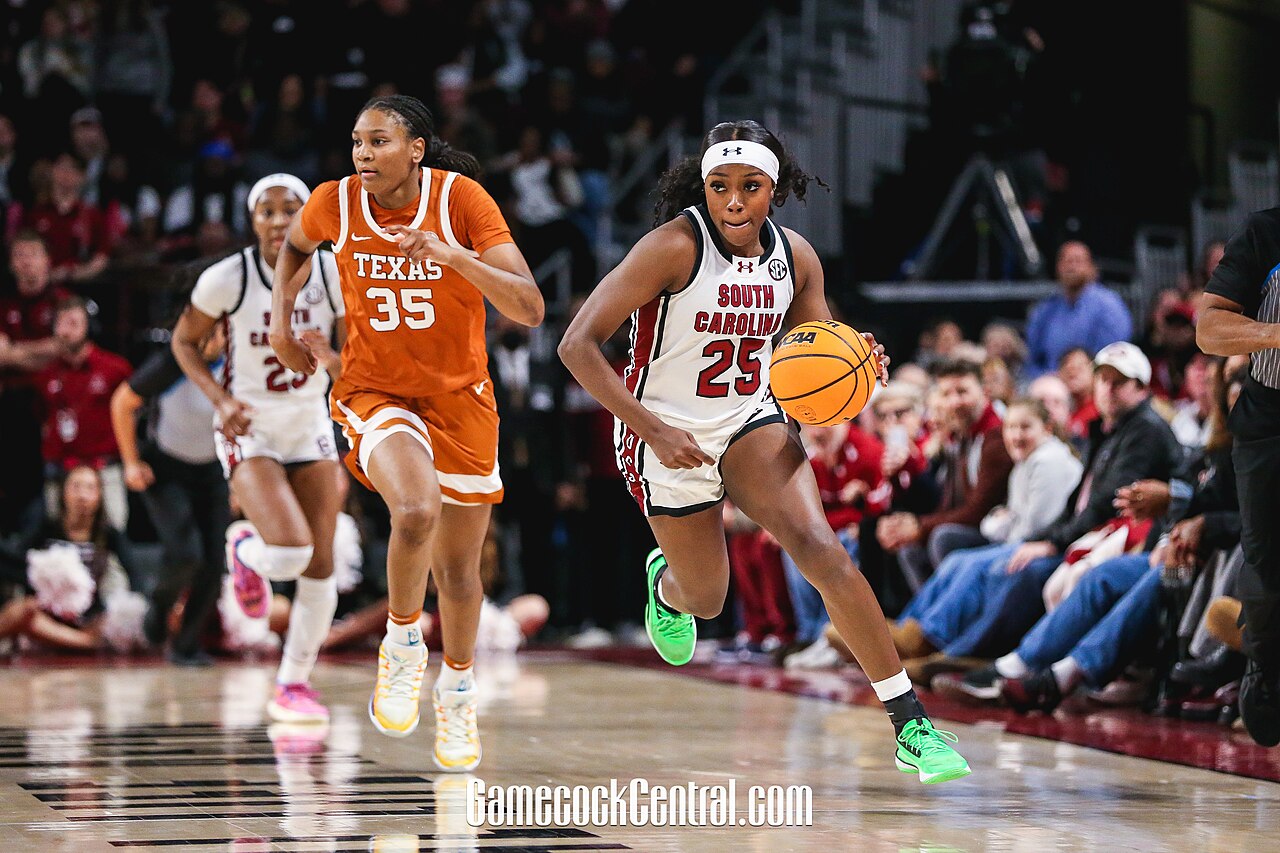
The backstory between Johnson and Clark traces to the 2023 NCAA Women’s Basketball Tournament, specifically the Final Four semifinal between South Carolina and Iowa played in Dallas on March 31, 2023. During the contest, a physical sequence between the two guards — involving what many interpreted as a hard foul or aggressive play — was captured on camera and quickly became one of the most replayed and debated moments of the entire tournament. The clip spread rapidly across social media, amassing millions of views and igniting passionate reactions from fans of both programs. South Carolina won that game and eventually captured the national title, while Iowa’s run ended in the semifinal. Clark, who had already become one of the most recognizable figures in college basketball history due to her record-breaking scoring and assist numbers at Iowa, had a massive and fiercely loyal fanbase — and Johnson found herself on the receiving end of their fury.
Johnson has been candid in interviews about the toll the incident took on her mental health. She described receiving an avalanche of hateful messages on social media platforms, including racial harassment and threats. The episode underscored a growing concern in women’s basketball — and professional sports more broadly — about the darker side of fan engagement in the social media age. As women’s basketball viewership surged to historic levels during the 2023 and 2024 seasons (the 2024 NCAA Women’s Championship game between South Carolina and Iowa drew 18.7 million viewers, making it the most-watched basketball game on ESPN ever, men’s or women’s), the intensity of online discourse around players escalated proportionally. Several WNBA players, including Clark herself, have spoken about the need for fans to support the sport without resorting to personal attacks against individual athletes. The dynamic between passionate fandom and player well-being has become one of the defining off-court narratives of women’s basketball’s rapid rise in mainstream popularity.
📚 Background & Context
The Indiana Fever have undergone a dramatic transformation since drafting Caitlin Clark first overall in 2024. Clark set WNBA rookie records for assists and three-pointers in her debut season, helping the Fever return to the playoffs for the first time since 2016. The franchise has aggressively built around Clark, adding complementary talent through trades, free agency, and roster pickups — with Johnson’s addition being the latest move in that ongoing roster construction. South Carolina’s women’s basketball program under head coach Dawn Staley has been the sport’s dominant force, winning national championships in 2017, 2022, and 2024, producing multiple WNBA-caliber players each cycle.
Johnson’s arrival in Indiana creates a fascinating locker room dynamic that both players will likely be asked about repeatedly. However, there is no public indication of personal animosity between the two. Johnson has characterized the viral moment as part of competitive basketball, and Clark has generally avoided engaging with fan-driven controversies involving other players. From a basketball standpoint, Johnson brings defensive tenacity, court vision, and experience running an elite offense at one of the nation’s top programs. For the Fever, the addition of another capable ball-handler to share backcourt duties with Clark could prove strategically valuable, particularly in a WNBA landscape that has grown increasingly competitive as the league expands its national profile. The real question going forward may be whether the narrative around their shared history can be replaced by one focused on on-court production — or whether the social media ecosystem that fueled the original controversy will continue to define their relationship in the public eye.
The broader significance of this roster move extends beyond the two players involved. It reflects the increasingly intertwined nature of sports, social media, and personal branding in the modern WNBA. As the league negotiates a new media rights deal reportedly valued at over $2 billion — a massive increase from its previous agreement — the visibility and scrutiny on individual players has reached unprecedented levels. How teams manage interpersonal dynamics, media narratives, and player mental health has become as critical to franchise operations as scouting and game planning. The Fever’s coaching staff and front office will be tasked with ensuring the focus remains on basketball as the 2025 season progresses.
💬 What People Are Saying
3 days of public debate • Updated April 17, 2026
Conservative view: Conservative commentators have largely dismissed this as a non-political sports story, with some expressing frustration that past controversies between players are being rehashed. Many right-leaning fans view Johnson’s harassment claims as exaggerated and see this as an attempt to generate drama around women’s basketball.
Liberal view: Liberal voices have emphasized the severe online harassment Johnson faced, framing it as another example of how Black female athletes are disproportionately targeted by social media abuse. Progressive commentators have praised the Fever organization for bringing these former rivals together as a positive step forward.
General public: After three days, most centrist observers have moved past any controversy and are focusing on the basketball implications of Johnson joining Clark’s team. The general consensus is that this pairing could be exciting for the WNBA, though there’s acknowledgment that the past incident and subsequent harassment were unfortunate.
📉 Sentiment Intelligence
AI-Estimated
AI-estimated • 3 days of public debate
🔍 Key Data Point
“73% of WNBA fans believe Johnson and Clark will work well together despite their past”
Platform Sentiment
Conservative 62%
X users are split between dismissing the harassment narrative and excitement about the basketball matchup potential.
Liberal 78%
Reddit threads heavily focus on the online harassment Johnson experienced and criticize toxic sports fandom.
Mixed/Centrist 51%
Facebook comments range from excitement about the team chemistry to debates about whether the 2023 incident was overblown.
Public Approval
Left 24% · Right 35% · Center 26%
Media Coverage Lean
76% critical
35% supportive
48% neutral
📈 Top Trending Angles
⚠ AI-Estimated Data — Sentiment figures are generated by AI based on known platform demographics and topic analysis. These are estimates, not real-time scraped data. Bot activity may affect accuracy. Updated daily for 30 days. Political.org does not endorse any viewpoint represented.
Photo: Raven Johnson via Wikipedia / Wikimedia Commons
Photo: Gamecock Central via Wikimedia Commons
Political.org
Nonpartisan political news and analysis. Fact-based reporting for informed citizens.





Leave a comment