



Rep. Jason Crow (D-Colo.) declared Tuesday that Russia is the “real winner” of the U.S. naval blockade in the Strait of Hormuz, arguing that the disruption of oil exports through one of the world’s most critical maritime chokepoints is driving up global energy prices in ways that directly benefit Moscow. Crow, a member of the House Armed Services and Intelligence Committees, questioned the strategic endgame of the operation, noting that Iran had already been disrupting traffic through the strait before the U.S. escalation.
◉ Key Facts
- ►Rep. Jason Crow (D-Colo.) said Russia stands to gain the most from the U.S. blockade of the Strait of Hormuz due to surging global oil prices
- ►The Strait of Hormuz handles roughly 20–21% of global petroleum consumption, with approximately 21 million barrels of oil passing through daily
- ►Crow questioned the blockade’s strategic purpose, noting Iran was already disrupting shipping through the strait before the U.S. action
- ►Russia, as one of the world’s top oil and natural gas exporters, benefits financially when global energy prices spike due to supply disruptions elsewhere
- ►The blockade has contributed to rising energy costs globally, with direct effects on consumer gasoline prices in the United States and allied nations
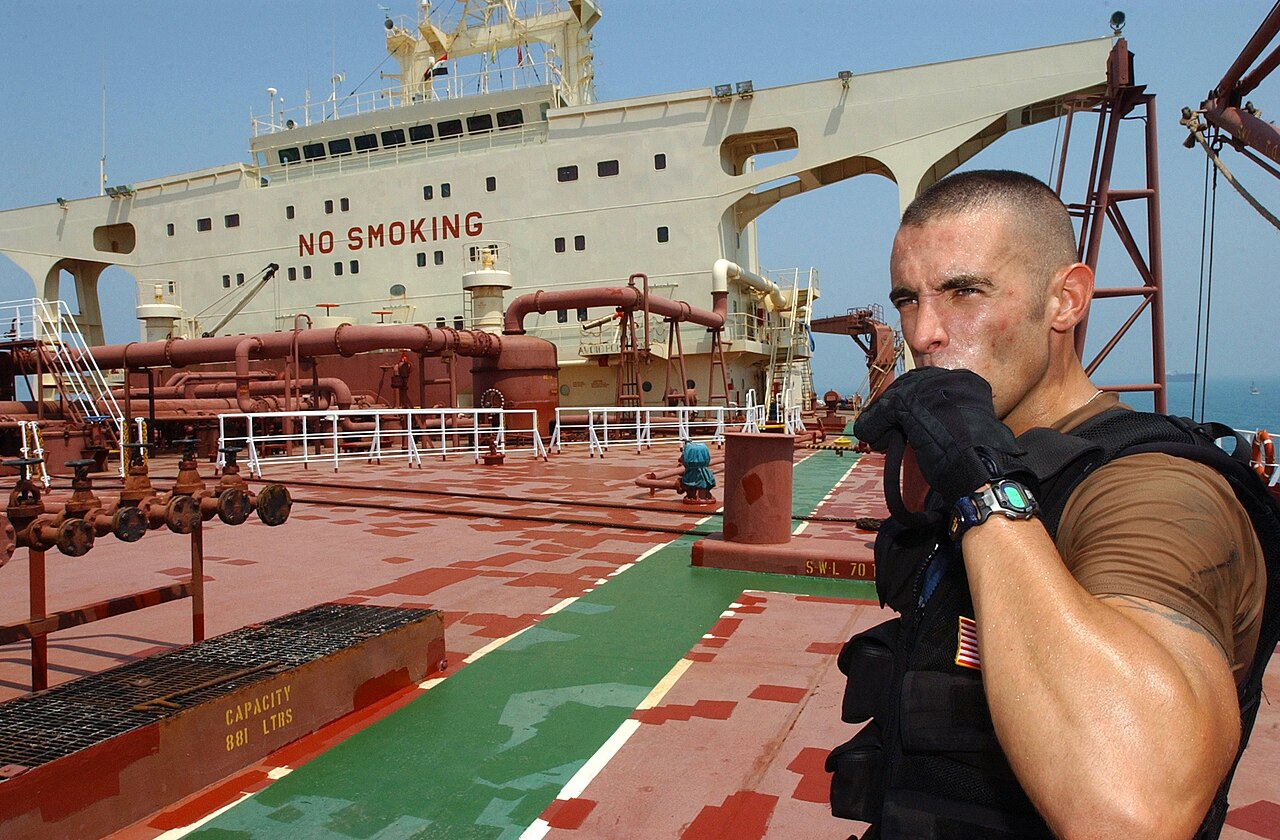
The Strait of Hormuz, a narrow waterway between Iran and Oman at the mouth of the Persian Gulf, is arguably the most strategically consequential maritime chokepoint on Earth. At its narrowest, the strait spans just 21 miles, with shipping lanes in each direction only two miles wide. According to the U.S. Energy Information Administration, roughly one-fifth of all global petroleum liquids pass through it daily, including oil exports from Saudi Arabia, Iraq, Kuwait, the United Arab Emirates, and Qatar. Any disruption — whether from military blockade, mine-laying, or naval confrontation — sends immediate shockwaves through global energy markets. The current U.S. operation has compounded existing supply pressures, pushing oil prices upward and tightening markets that were already strained by geopolitical uncertainty and OPEC+ production decisions.
Crow’s central argument — that Moscow is the unintended beneficiary — draws on well-established economic dynamics. Russia is the world’s third-largest oil producer and second-largest natural gas exporter. When supply disruptions elsewhere drive up the global price of crude, Russia earns significantly more revenue per barrel on its own exports. This dynamic has been observed repeatedly: during the 2019 attacks on Saudi Aramco facilities, during previous periods of heightened U.S.-Iran tensions, and most dramatically following Russia’s 2022 invasion of Ukraine when Western sanctions paradoxically coincided with soaring energy revenues for Moscow due to elevated global prices. Crow’s concern is that the U.S. blockade, whatever its intended pressure campaign against Iran, is effectively subsidizing the Russian treasury at a time when Washington is simultaneously attempting to constrain Moscow’s economic capacity to wage war in Ukraine.
The Colorado Democrat also raised pointed questions about the operation’s strategic logic. Iran has long threatened to close the Strait of Hormuz during periods of escalation with the United States, and Tehran has periodically harassed commercial shipping, seized tankers, and conducted provocative naval maneuvers in the waterway. Iran’s Islamic Revolutionary Guard Corps Navy maintains fast-attack boats, anti-ship missiles, and mine-laying capabilities specifically designed to threaten traffic through the strait. Crow’s argument — that Iran was already engaging in its own form of blockade — suggests the U.S. operation may be duplicating rather than counteracting the disruption, raising the question of who ultimately bears the cost. American consumers, along with those in allied nations heavily dependent on Gulf oil imports — including Japan, South Korea, and India — face the most direct economic impact through higher fuel and energy prices.
📚 Background & Context
The Strait of Hormuz has been a flashpoint in U.S.-Iran relations for decades. During the 1980s “Tanker War,” both Iran and Iraq targeted oil shipping in the Persian Gulf, prompting the U.S. Navy to escort reflagged Kuwaiti tankers in Operation Earnest Will. In 1988, the U.S. and Iran engaged in direct naval combat during Operation Praying Mantis, the largest American naval engagement since World War II. More recently, the Trump administration’s 2018 withdrawal from the Iran nuclear deal and reimposition of maximum pressure sanctions led to a series of tanker seizures and attacks in 2019, underscoring the strait’s enduring volatility. Every major disruption in the strait has historically correlated with significant global oil price increases.
The debate now shifts to whether the blockade achieves sufficient strategic objectives to justify its economic side effects. Congressional critics like Crow are calling for clearer articulation of the mission’s goals, a defined timeline, and an assessment of second-order consequences — particularly the financial windfall for adversaries like Russia. Supporters of the operation argue it is necessary to enforce sanctions on Iranian oil exports and prevent Tehran from funding proxy militias across the Middle East. The coming weeks will likely see intensified congressional scrutiny, particularly from the Armed Services and Foreign Affairs committees, as lawmakers demand briefings on the operation’s scope, rules of engagement, and exit strategy. Meanwhile, global energy markets will continue to price in the uncertainty, with every additional day of disruption adding pressure on consumers and governments worldwide.
💬 What People Are Saying
Based on public reaction across social media and news platforms, here is the general consensus on this story:
- 🔴Conservative and right-leaning voices largely defend the blockade as a necessary show of strength against Iran, arguing that maximum pressure on Tehran is essential to curbing its nuclear ambitions and support for proxy groups. Many dismiss Crow’s Russia argument as a distraction from what they view as overdue enforcement of Iranian sanctions and assert that U.S. energy independence should insulate American consumers from price shocks.
- 🔵Liberal and left-leaning commentators echo Crow’s concerns, emphasizing the lack of congressional authorization and the unintended economic consequences for American families and global allies. Many point to the irony of an operation ostensibly targeting Iran that effectively enriches Russia, and call for diplomatic alternatives including a return to multilateral negotiations on Iran’s nuclear program and oil export arrangements.
- 🟠The broader public reaction centers on pocketbook concerns — rising gasoline and energy prices — with many Americans expressing frustration at geopolitical maneuvering that appears to come at their direct expense. There is widespread demand across the political spectrum for clearer communication from the administration about the blockade’s objectives, expected duration, and plan for mitigating economic harm at home.
Note: Social reactions represent general public sentiment and do not reflect Political.org’s editorial position.
Photo: U.S. Navy photo by Photographer’s Mate Airman Eben Boothby via Wikimedia Commons
Photo: U.S. Navy photo via Wikimedia Commons
Political.org
Nonpartisan political news and analysis. Fact-based reporting for informed citizens.





Leave a comment