



A groundbreaking long-term study of the world’s largest known community of wild chimpanzees has documented an extraordinarily rare event: the violent fracturing of a stable social group in what researchers are describing as the primate equivalent of a “civil war.” The findings, which draw on decades of observational data, are prompting scientists and social theorists to reexamine fundamental questions about how complex societies — including human ones — can disintegrate from within.
◉ Key Facts
- ►Researchers documented a violent schism within the largest known community of wild chimpanzees, a group that had been studied for decades in a continuous long-term field project.
- ►The community split into rival factions that engaged in lethal violence against former allies — behavior that is extremely rare even among chimpanzees, humanity’s closest living relatives.
- ►Only one comparable event has been thoroughly documented before: the famous Gombe chimpanzee community split observed by Jane Goodall’s team in the 1970s.
- ►Scientists point to resource competition, growing community size, and the weakening of social bonds as key factors that precipitated the collapse.
- ►The study has implications for understanding social cohesion and fragmentation in human societies, drawing parallels to how large groups become ungovernable when internal trust erodes.
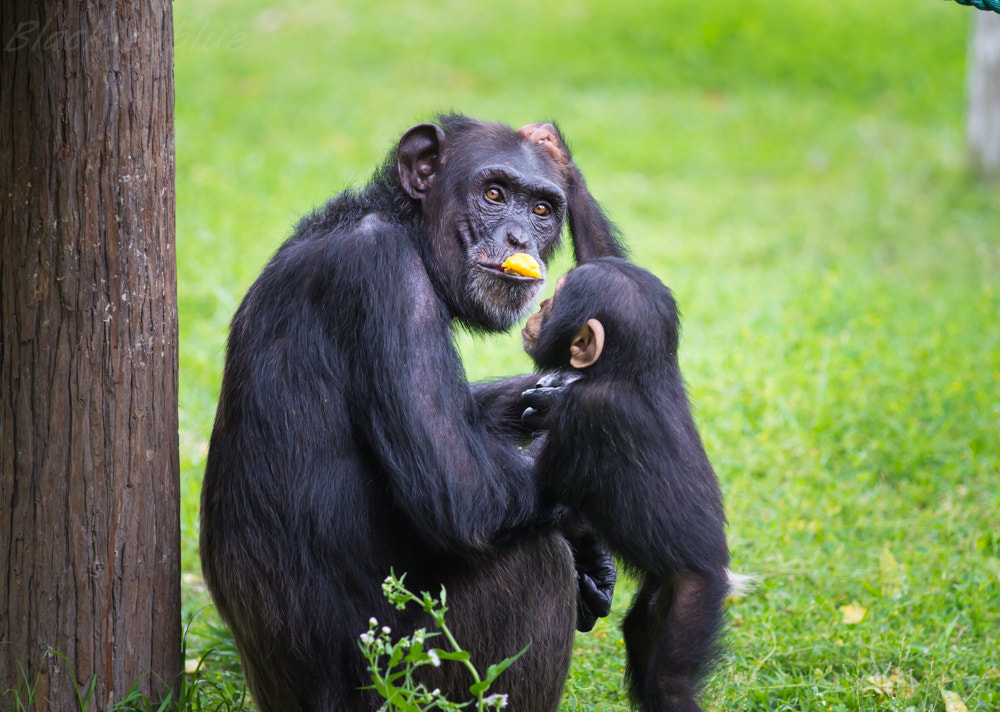
The study represents only the second well-documented instance of a chimpanzee community tearing itself apart in a manner analogous to civil conflict. The first and most famous case occurred between 1974 and 1978 at Gombe Stream National Park in Tanzania, where primatologist Jane Goodall and her colleagues watched in shock as the Kasekela community split into two factions — the Kasekela and the Kahama — and the larger group systematically hunted down and killed members of the smaller one over several years. That event fundamentally altered scientific understanding of primate violence, challenging the prevailing belief at the time that chimpanzees were essentially peaceful creatures. Goodall herself described the experience as deeply disturbing, writing that she had not previously believed chimpanzees capable of such brutality. The new study adds critical new data to what had been, for nearly half a century, essentially a single-case observation — raising the possibility that community fracture, while rare, may be a recurring pattern in chimpanzee social life rather than a one-off anomaly.
What makes the current findings particularly significant is the scale and richness of the data. The community under study was the largest known wild chimpanzee group, numbering well over 100 individuals — far exceeding the typical community size of 20 to 80 members observed at most field sites. Researchers have long theorized that chimpanzee communities, like human societies, face increasing internal strain as they grow. Larger groups require more resources, generate more social competition, and make it harder for individuals to maintain the network of personal relationships that hold the group together. The concept parallels what anthropologist Robin Dunbar famously proposed regarding human social groups: that there is a cognitive limit — often cited as approximately 150 individuals — beyond which stable, cohesive social relationships become difficult to maintain. In the chimpanzee community under study, researchers observed that as the group expanded, peripheral members began spending less time with the core group, forging stronger bonds with local subgroups instead. Over time, these subgroups developed their own territorial boundaries and social hierarchies, and what had been minor tensions escalated into outright hostility and eventually lethal intergroup violence.
The parallels to human societal collapse, while imperfect, are striking. Political scientists and historians have long studied the conditions under which states and communities fracture — from the breakup of Yugoslavia to the Rwandan genocide to the American Civil War. Common threads include resource scarcity, the erosion of shared identity, the rise of competing power centers, and the breakdown of institutions that mediate disputes. While it would be an oversimplification to map chimpanzee behavior directly onto human geopolitics, the researchers argue that studying our closest evolutionary relatives provides a valuable window into the deep biological and social roots of group fragmentation. Chimpanzees share approximately 98.7 percent of their DNA with humans, and the two species diverged from a common ancestor roughly six to seven million years ago. The social structures of chimpanzee communities — with their hierarchies, alliances, coalitions, and territorial behavior — are among the most complex in the animal kingdom outside of human civilization.
📚 Background & Context
Lethal intergroup conflict in chimpanzees has been documented at multiple field sites across Africa, including Gombe, Kibale, Mahale, and Ngogo in Uganda. However, intragroup lethal conflict — where a single community violently splits — has been far rarer and more difficult to study. The Gombe split of the 1970s remained the only well-documented case for decades, leading to debate over whether it was a natural occurrence or an artifact of human provisioning (banana feeding) that had artificially inflated the community’s size. The new study, conducted under more naturalistic conditions, significantly strengthens the case that community fission is a genuine feature of chimpanzee social ecology.
The research team has indicated that continued observation of the now-separated factions will be essential to understanding the long-term consequences of the split — including whether the smaller group can survive, whether territorial boundaries stabilize, and whether reconciliation or further violence follows. For the broader scientific community, the study opens new avenues for comparative research into the mechanisms of social cohesion and collapse across species. It also raises pressing questions about whether habitat loss and human encroachment — which compress chimpanzee ranges and force larger numbers into smaller territories — could increase the frequency of such violent fractures, adding a conservation dimension to what is already a landmark finding in behavioral ecology.
💬 What People Are Saying
Based on public reaction across social media and news platforms, here is the general consensus on this story:
- 🔴Conservative commentators have highlighted the study as evidence that conflict and competition are deeply embedded in primate nature, reinforcing arguments that hierarchical social structures and territorial instincts are biological realities rather than purely cultural constructs. Some have cautioned against drawing overly direct political analogies.
- 🔵Progressive voices have focused on the environmental and structural dimensions, emphasizing that resource scarcity and habitat loss may be accelerating these breakdowns — and drawing parallels to how inequality, institutional erosion, and resource competition drive human social fragmentation and political polarization.
- 🟠The general public has responded with widespread fascination, with many expressing surprise at the sophistication and brutality of chimpanzee social dynamics. A common sentiment across ideological lines is that the study serves as a sobering reminder of the fragility of social cohesion in any complex society.
Note: Social reactions represent general public sentiment and do not reflect Political.org’s editorial position.
Photo: Richard Sutcliffe via Wikimedia Commons
Photo: Blackseablue via Wikimedia Commons
Political.org
Nonpartisan political news and analysis. Fact-based reporting for informed citizens.





Leave a comment