



President Donald Trump announced that the United States would move to “blockade” the Strait of Hormuz after diplomatic negotiations with Iran broke down, dramatically escalating tensions in one of the world’s most strategically vital waterways. The threat, if carried out, would represent one of the most consequential military actions in the Persian Gulf region in decades and could send shockwaves through global energy markets.
◉ Key Facts
- ►President Trump declared the U.S. would close or blockade the Strait of Hormuz following the collapse of peace talks with Iran
- ►Approximately 20–21% of the world’s daily oil consumption—roughly 20 million barrels per day—passes through the 21-mile-wide strait
- ►The strait, located between Iran and Oman, connects the Persian Gulf to the Gulf of Oman and the broader Arabian Sea
- ►A blockade would primarily target Iranian oil exports, which have been a central point of contention in U.S.-Iran relations for years
- ►Under international law, a naval blockade is generally considered an act of war, raising significant legal and geopolitical questions
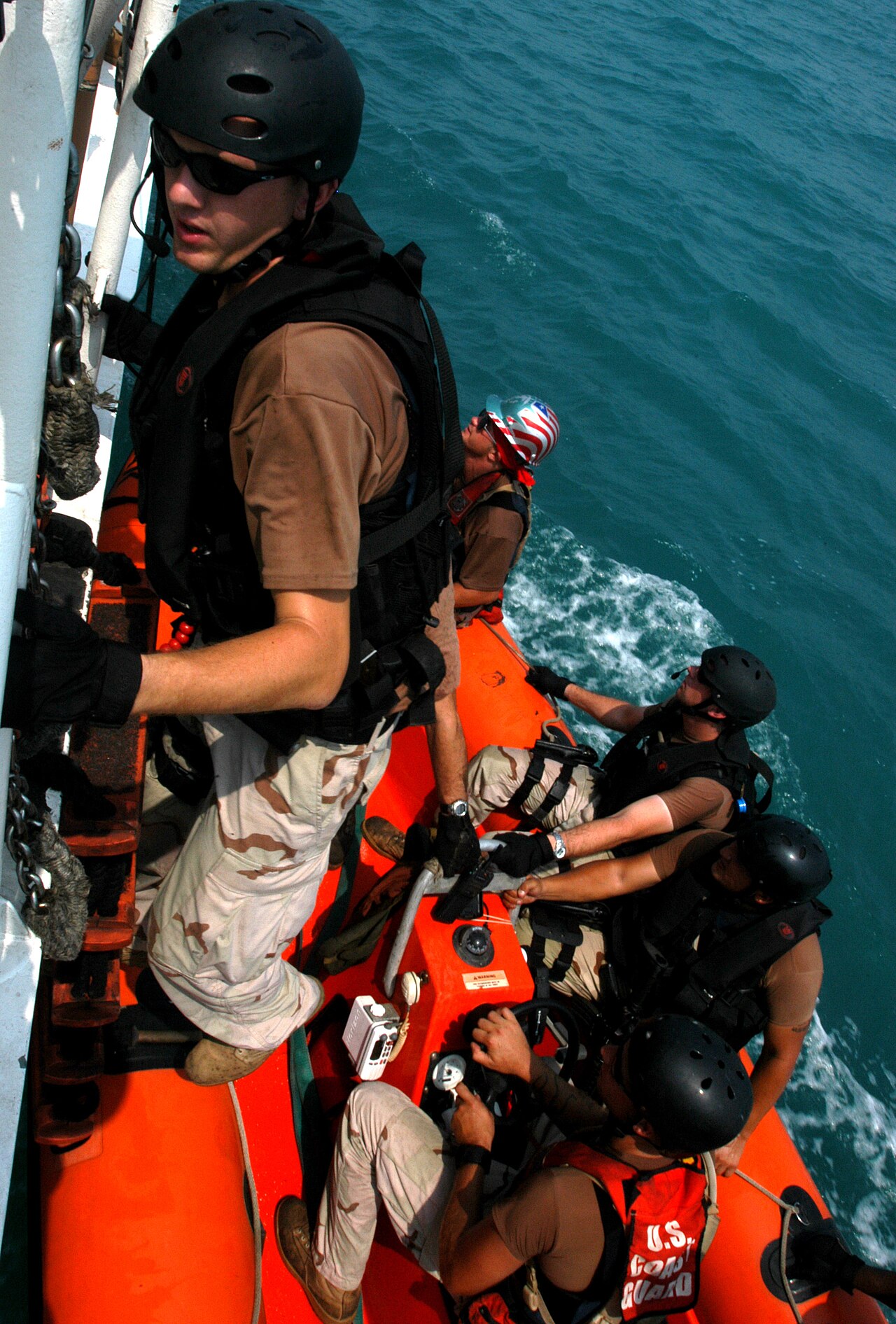
The Strait of Hormuz is arguably the most important oil chokepoint in the world. Bordered by Iran to the north and Oman and the United Arab Emirates to the south, its narrowest point spans just 21 miles, with shipping lanes in each direction only two miles wide. Saudi Arabia, Iraq, Kuwait, the UAE, Qatar, and Bahrain all rely on the strait as their primary route for exporting oil and liquefied natural gas. The U.S. Navy’s Fifth Fleet, headquartered in Bahrain, has maintained a near-continuous presence in the region for decades to ensure freedom of navigation. Any disruption to traffic through the strait would immediately impact global crude oil prices and could trigger cascading economic consequences for importing nations across Asia, Europe, and beyond. China, India, Japan, and South Korea are among the largest importers of Persian Gulf oil and would be particularly vulnerable to supply disruptions.
The collapse of U.S.-Iran talks marks another chapter in a long and fraught diplomatic history between the two nations. Iran’s nuclear program has been at the center of international concern since revelations about covert enrichment facilities emerged in the early 2000s. The 2015 Joint Comprehensive Plan of Action (JCPOA), negotiated under the Obama administration, placed constraints on Iran’s nuclear activities in exchange for sanctions relief. Trump withdrew the U.S. from the JCPOA during his first term in 2018, reimposing sweeping economic sanctions under a “maximum pressure” campaign. Iran subsequently resumed advanced uranium enrichment, reportedly reaching 60% purity—far beyond what is needed for civilian energy but still below the roughly 90% threshold for weapons-grade material. Efforts to revive or replace the agreement have repeatedly stalled, and the latest breakdown suggests the diplomatic gap between Washington and Tehran remains wide.
A blockade of the Strait of Hormuz would be an extraordinarily provocative step under international law. The United Nations Convention on the Law of the Sea (UNCLOS) guarantees the right of transit passage through international straits, and legal scholars broadly agree that a peacetime blockade of an international waterway constitutes an act of war. While the United States has not ratified UNCLOS, it has traditionally upheld and enforced its principles regarding freedom of navigation. Iran itself has periodically threatened to close the strait in response to sanctions pressure, and such threats have historically been met with stern warnings from Washington. The reversal—with the U.S. now threatening closure—represents a dramatic inversion of long-standing American policy in the region. Allies in the Gulf Cooperation Council, as well as NATO partners, would likely face immediate pressure to respond, and the move could strain relationships with nations that depend on unimpeded oil flows.
📚 Background & Context
The Strait of Hormuz has been a flashpoint for U.S.-Iran tensions for decades. During the 1980s “Tanker War,” both Iran and Iraq attacked commercial vessels in the Persian Gulf, leading the U.S. to reflag Kuwaiti tankers and escort them through the strait. In 2019, a series of attacks on oil tankers near the strait and Iran’s downing of a U.S. surveillance drone brought the two countries to the brink of open conflict. The U.S. military maintains significant naval assets in the region, including carrier strike groups and thousands of personnel stationed across multiple bases in Bahrain, Qatar, and the UAE.
The immediate question is whether Trump’s declaration represents a concrete policy directive or a bargaining tactic designed to pressure Iran back to the negotiating table. Markets will be closely watching for any movement of additional U.S. naval assets toward the Persian Gulf, which would signal operational planning. Congressional reaction will also be critical: under the War Powers Act, the president’s authority to initiate hostilities without congressional approval is limited, and lawmakers from both parties have historically been sensitive to unilateral military escalation in the Middle East. Iran’s response—whether through diplomatic channels, asymmetric military action via proxy forces, or its own threats to disrupt regional stability—will likely determine how quickly this situation escalates or de-escalates. Energy analysts warn that even the credible threat of a blockade could push oil prices significantly higher, with downstream effects on gasoline prices and inflation worldwide.
💬 What People Are Saying
Based on public reaction across social media and news platforms, here is the general consensus on this story:
- 🔴Many conservatives support the president’s stance as a necessary show of strength, arguing that Iran has exploited diplomatic processes to advance its nuclear program while funding destabilizing proxy conflicts throughout the Middle East. Some frame the blockade threat as a logical extension of maximum pressure and assert that only credible military deterrence will bring Tehran to the table in good faith.
- 🔵Liberal and progressive voices have expressed alarm, warning that a blockade constitutes an act of war that could trigger a devastating military conflict in the Middle East without congressional authorization. Critics argue the administration’s withdrawal from the JCPOA created the conditions for the current crisis and that diplomacy, not escalation, remains the only viable path to preventing Iran from acquiring nuclear weapons.
- 🟠Across the broader public, there is widespread concern about the potential economic impact, particularly rising gas prices and the risk of being drawn into another prolonged Middle Eastern conflict. Many observers are uncertain whether the threat is a genuine policy shift or a negotiating tactic, and polling consistently shows that Americans are broadly opposed to new military engagements in the region.
Note: Social reactions represent general public sentiment and do not reflect Political.org’s editorial position.
Photo: Official Navy Page from United States of America
Alex R. Forster/U.S. Navy via Wikimedia Commons
Photo: U.S. Navy photo via Wikimedia Commons
Political.org
Nonpartisan political news and analysis. Fact-based reporting for informed citizens.





Leave a comment