



NASA’s Artemis II mission — the first crewed voyage to lunar orbit in over half a century — has emerged as an extraordinary moment of collective human unity, transcending political, cultural, and national divides at a time when such consensus is exceedingly rare. As the four-person crew loops around the Moon and sends back images of Earth from deep space, public reaction across the globe has been overwhelmingly marked by shared wonder, national pride, and a renewed sense of common purpose.
◉ Key Facts
- ►Artemis II is the first crewed mission to the Moon since Apollo 17 in December 1972 — a gap of more than 52 years.
- ►The four-person crew includes NASA astronauts Reid Wiseman, Victor Glover, and Christina Koch, along with Canadian Space Agency astronaut Jeremy Hansen — making it the most diverse lunar crew in history.
- ►Victor Glover is the first Black astronaut and Christina Koch is the first woman to travel to lunar distance, milestones widely celebrated worldwide.
- ►Live-streamed footage of Earth from the Orion spacecraft has been viewed hundreds of millions of times across platforms, drawing comparisons to the cultural impact of Apollo 8’s “Earthrise” photograph in 1968.
- ►Polling conducted during the mission shows bipartisan approval ratings for NASA exceeding 80%, one of the highest favorability marks for any federal agency.
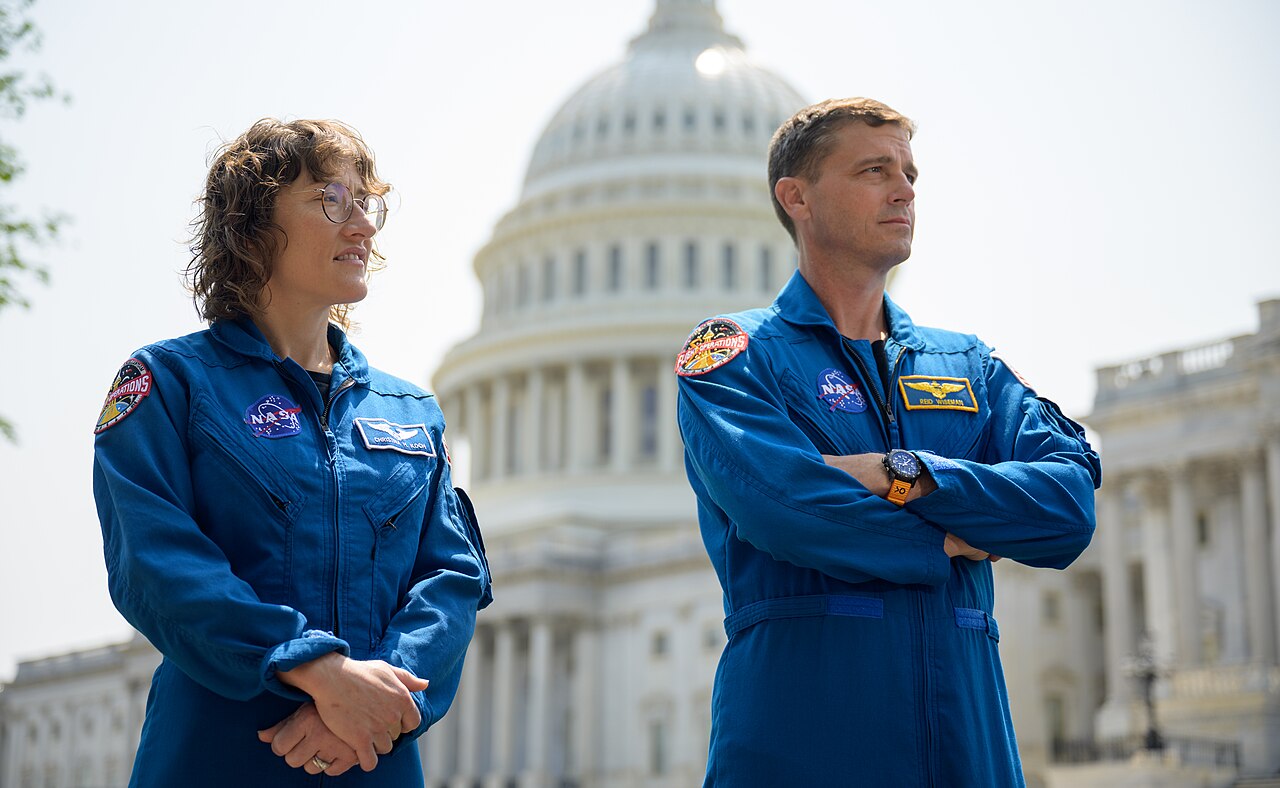
The cultural resonance of Artemis II has been striking in both its depth and breadth. In an era defined by partisan polarization — where Americans routinely disagree on basic facts about the economy, public health, and governance — the sight of astronauts traveling beyond low-Earth orbit for the first time since the Nixon administration has functioned as something close to a universal point of agreement. Watch parties have sprung up at museums, universities, bars, and churches across the United States and in cities around the world. The mission’s international dimension, anchored by Canadian astronaut Jeremy Hansen’s participation as part of Canada’s contribution to the Artemis program, has amplified global engagement. The Canadian Space Agency’s role reflects broader international partnerships underpinning the Artemis Accords, which have been signed by more than 40 nations since 2020, establishing principles for peaceful lunar exploration.
Historians and social scientists have noted that space missions have periodically served this unifying function — but not always. The Apollo program occurred against the backdrop of the Vietnam War, civil rights upheaval, and widespread social unrest, yet the Moon landing in July 1969 briefly paused those divisions. An estimated 600 million people watched Apollo 11 live, roughly one-sixth of the world’s population at the time. Artemis II’s digital reach may ultimately dwarf that figure. The “overview effect” — a cognitive shift reported by astronauts who see Earth from space, characterized by a profound sense of planetary interconnectedness — appears to be transmitting, at least partially, through high-definition live streams to audiences on the ground. Researchers at the University of Pennsylvania who study collective emotion have noted measurable declines in hostile political discourse on social media platforms during key mission milestones, a phenomenon they have termed a “shared awe” effect.
📚 Background & Context
The Artemis program was formally announced in 2017 under the Trump administration’s Space Policy Directive 1 and continued under President Biden, making it one of the rare major federal initiatives to enjoy sustained bipartisan support across multiple administrations. The uncrewed Artemis I mission successfully orbited the Moon in late 2022, testing the Space Launch System rocket and Orion capsule. Artemis II’s crewed flyby is the critical intermediate step before Artemis III, which aims to land astronauts — including the first woman — on the lunar surface, potentially as early as 2026 or 2027.
The mission also arrives amid intensifying global competition in space. China’s Chang’e program has achieved multiple successful lunar landings, including on the far side of the Moon, and Beijing has announced plans for a crewed lunar landing before 2030. India’s Chandrayaan-3 successfully soft-landed near the lunar south pole in 2023. Against this backdrop, Artemis II serves a dual purpose: it reasserts American-led leadership in deep-space exploration while simultaneously reminding observers that space achievement has historically been one of the few arenas capable of inspiring cooperation rather than conflict. The 1975 Apollo-Soyuz mission, conducted at the height of the Cold War, stands as a prior example of space serving as diplomatic common ground.
Whether this moment of collective awe proves durable or fleeting remains an open question. The Apollo program’s unifying power faded quickly; by 1970, public interest in Moon missions had declined sharply, and the program was canceled two years ahead of schedule. Budget analysts note that NASA’s current funding — roughly $25 billion annually, or less than 0.5% of the federal budget — remains a fraction of the agency’s Apollo-era peak of approximately 4.5% of federal spending in 1966. Sustaining public enthusiasm through Artemis III and beyond will likely depend not just on spectacle but on demonstrable scientific returns, commercial partnerships, and continued bipartisan political will. For now, however, the mission has achieved something that eluded nearly every other event in recent memory: bringing a fractured public together, if only briefly, in shared wonder at what humanity can accomplish.
💬 What People Are Saying
Based on public reaction across social media and news platforms, here is the general consensus on this story:
- 🔴Conservative commentators have largely celebrated the mission as a demonstration of American strength, technological superiority, and a reassertion of U.S. dominance over China in the new space race. Many have credited the program’s origins in the Trump-era space policy directive and emphasized national security implications of maintaining a lunar presence.
- 🔵Progressive voices have highlighted the historic diversity of the crew — the first Black astronaut and first woman to reach lunar distance — as a long-overdue milestone. Some have also used the moment to advocate for increased NASA funding, expanded STEM education initiatives, and greater investment in climate science from space-based observation platforms.
- 🟠The overwhelming public reaction across political lines has been one of genuine awe and pride. Social media has been flooded with comparisons to the Apollo era, personal stories of watching with children and grandparents, and a widespread sentiment that the mission represents a reminder of shared humanity — a rare point of consensus in an otherwise deeply divided public landscape.
Note: Social reactions represent general public sentiment and do not reflect Political.org’s editorial position.
Photo: REUTERS via Wikimedia Commons
Photo: NASA Headquarters / NASA/Bill Ingalls via Wikimedia Commons
Political.org
Nonpartisan political news and analysis. Fact-based reporting for informed citizens.





Leave a comment