



Escalating tensions between the United States and Iran over the Strait of Hormuz appeared to pivot dramatically this week, moving from the brink of potential military confrontation to a contentious debate over economic control and shipping fees through one of the world’s most strategically vital waterways. The shift underscores a broader pattern in U.S.-Iran relations where military threats and economic coercion operate as interchangeable instruments of pressure.
◉ Key Facts
- ►The Strait of Hormuz handles approximately 20-21% of global petroleum liquids consumption, with roughly 21 million barrels of oil passing through daily as of recent estimates.
- ►U.S.-Iran tensions intensified amid ongoing nuclear negotiations, sanctions enforcement, and regional proxy conflicts throughout 2025.
- ►Iran has historically threatened to close or impose controls on the Strait in response to economic sanctions, a leverage point it has used repeatedly since the 1980s.
- ►The concept of imposing tolls or transit fees on Hormuz shipping has emerged as an alternative form of economic coercion, raising questions about international maritime law under the United Nations Convention on the Law of the Sea (UNCLOS).
- ►The week’s developments represented a de-escalation from direct military threats against Iran, though the economic dimensions carry their own significant risks to global markets.
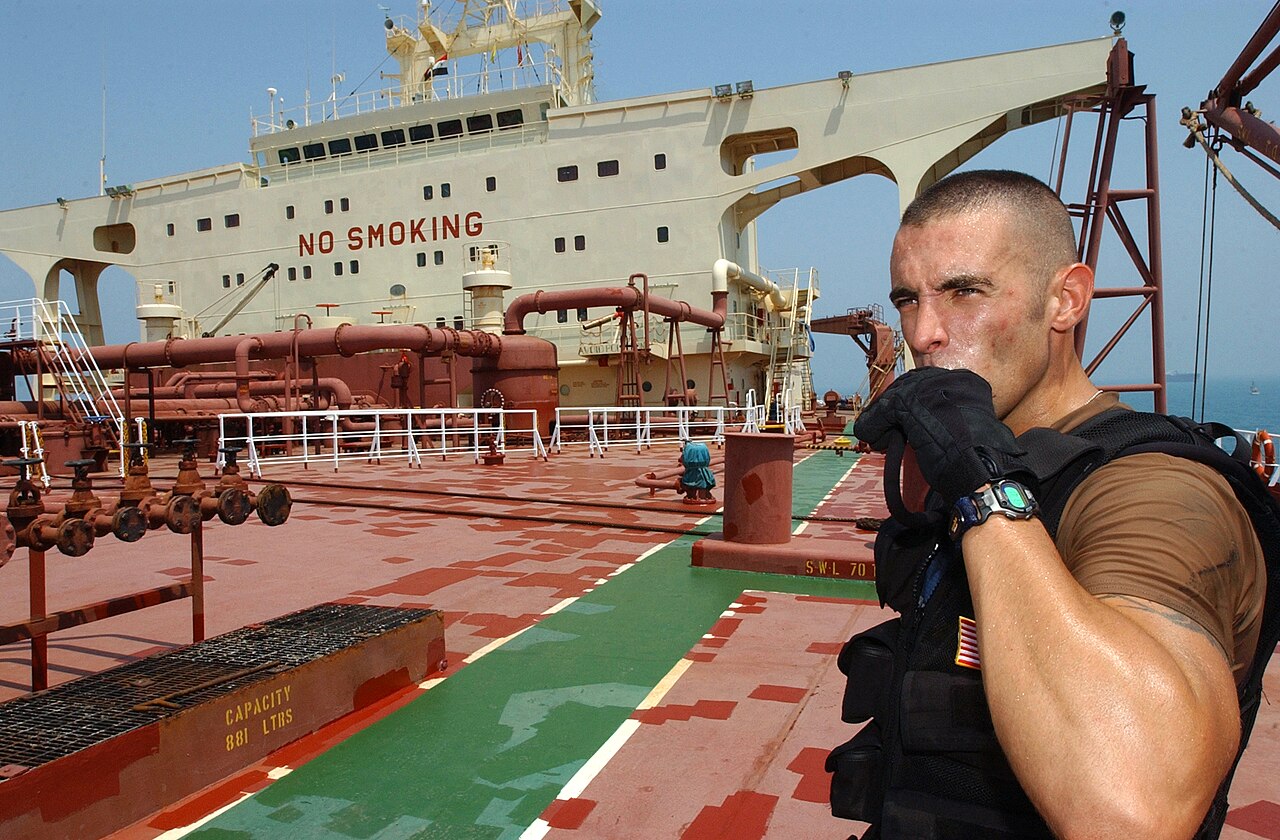
The Strait of Hormuz, a narrow waterway at its tightest only 21 miles wide between Iran and Oman, has long been the fulcrum of global energy security. Any disruption — whether through military blockade, mine-laying, or the imposition of transit fees — has the potential to send shockwaves through oil markets and the broader global economy. The strait connects the Persian Gulf, where major producers including Saudi Arabia, Iraq, Kuwait, the United Arab Emirates, and Qatar export their crude, to the Gulf of Oman and the open ocean. The U.S. Energy Information Administration has consistently classified it as the world’s most important oil chokepoint. During this week’s standoff, the specter of military strikes against Iranian infrastructure — which would have threatened one of the oldest continuous civilizations in human history, with cultural heritage dating back thousands of years to the Persian Empire — gave way to a more measured, if still contentious, discussion about economic leverage and control over maritime transit.
The idea of tolling the Strait of Hormuz raises immediate legal and geopolitical complications. Under UNCLOS, which codifies the principle of “transit passage,” ships — including military vessels — have the right to pass through international straits used for navigation without obstruction or fees. Iran is a signatory to UNCLOS but has not ratified it, and has periodically asserted that it has sovereign rights over the strait’s waters that supersede international norms. Any attempt to impose tolls, whether by Iran or through some other mechanism, would likely face legal challenges and could set a precedent affecting other critical chokepoints such as the Strait of Malacca, the Suez Canal, and the Bab el-Mandeb. From an economic standpoint, even the credible threat of new costs on Hormuz transit can affect oil futures markets, shipping insurance premiums, and energy prices globally. The shift from military brinkmanship to economic maneuvering may appear to be progress, but analysts caution that economic coercion at this scale carries its own destabilizing consequences, particularly for energy-importing nations in Asia and Europe.
The broader context also involves the Trump administration’s approach to Iran, which has combined maximum-pressure sanctions campaigns with intermittent diplomatic overtures and military posturing. The administration has signaled willingness to use military force to protect American interests in the Gulf region, while simultaneously pursuing negotiations related to Iran’s nuclear program. Iran, for its part, has leveraged its geographic position astride the Strait of Hormuz as its primary deterrent against regime change, a strategy it has employed since the Iran-Iraq War of the 1980s when it attacked tankers and laid mines in the waterway during the so-called “Tanker War.” The Islamic Revolutionary Guard Corps Navy maintains a significant presence in the strait, equipped with fast attack boats, anti-ship missiles, and mine-laying capabilities that give Iran asymmetric leverage against far more powerful naval forces.
📚 Background & Context
Iran has threatened to close the Strait of Hormuz on multiple occasions — most notably during heightened sanctions periods in 2012 and 2018-2019 — though it has never fully followed through. The U.S. Fifth Fleet, headquartered in Bahrain, maintains a permanent naval presence in the region specifically to ensure freedom of navigation through the strait. In 2019, a series of tanker attacks and Iran’s seizure of the British-flagged Stena Impero brought the region to the edge of open conflict, ultimately resolved through diplomatic channels. The current episode follows a similar escalation-to-negotiation pattern that has characterized U.S.-Iran dynamics for decades.
Going forward, the key question is whether the shift from military threats to economic disputes represents genuine de-escalation or simply a change in the nature of the confrontation. Markets will be closely watching for any concrete moves to impose transit fees or other restrictions on Hormuz shipping, which could trigger immediate spikes in oil prices and shipping costs. Diplomatic observers will be monitoring whether the toll discussion becomes a formal negotiating position or remains rhetorical leverage. The potential for miscalculation remains high in one of the most militarized waterways on earth, and any incident — whether a naval confrontation, a drone strike, or an aggressive enforcement of tolling — could rapidly re-escalate the situation. For global energy consumers, the Strait of Hormuz remains what it has been for decades: a single geographic bottleneck upon which an outsized share of the world’s economic stability depends.
💬 What People Are Saying
Based on public reaction across social media and news platforms, here is the general consensus on this story:
- 🔴Conservative commentators have largely framed the toll discussion as a sign of American strength forcing Iran to the negotiating table rather than the battlefield. Many argue that credible military threats created the conditions for this shift, and some advocate maintaining maximum pressure to extract further concessions. Others have expressed skepticism that tolling discussions represent real progress, viewing them as a delay tactic by Iran.
- 🔵Progressive voices have emphasized the dangers of the military escalation that preceded the economic pivot, warning that brinkmanship with Iran risks catastrophic humanitarian consequences and potential destruction of irreplaceable cultural heritage sites in a civilization thousands of years old. Many have called for sustained diplomacy and a return to multilateral frameworks rather than unilateral economic coercion.
- 🟠The broader public reaction reflects relief that the immediate threat of military conflict has receded, coupled with anxiety about the potential impact on gas prices and the global economy. Many observers note weariness with the cyclical nature of U.S.-Iran tensions and express concern that neither escalation nor economic standoffs produce lasting resolution.
Note: Social reactions represent general public sentiment and do not reflect Political.org’s editorial position.
Photo: Official Navy Page from United States of America
Alex R. Forster/U.S. Navy via Wikimedia Commons
Photo: U.S. Navy photo via Wikimedia Commons
Political.org
Nonpartisan political news and analysis. Fact-based reporting for informed citizens.





Leave a comment